
Quick Read Summary
Hamilton, Ontario is a geographically diverse city shaped by Lake Ontario, Hamilton Harbour and the Niagara Escarpment. Its neighbourhoods range from historic lower-city communities and established areas on Hamilton Mountain to newer suburban development, waterfront locations and rural properties. Ancaster, Dundas, Stoney Creek and Waterdown are also part of Hamilton while retaining distinct community identities. For buyers, understanding these geographic and neighbourhood differences is an important first step because housing, transportation, walkability, amenities and access to natural areas can vary significantly across the city.
Key Takeaways
- The Niagara Escarpment divides much of urban Hamilton into the lower city and Hamilton Mountain, two areas with different development patterns and housing characteristics.
- Hamilton includes historic urban neighbourhoods, established suburban communities, newer development, waterfront areas and rural properties.
- Lake Ontario, Hamilton Harbour, the Niagara Escarpment, waterfalls, trails and conservation lands are important parts of Hamilton’s setting and outdoor lifestyle.
- Buyers should compare Hamilton at the community and neighbourhood level rather than treating the city as one uniform real estate market.
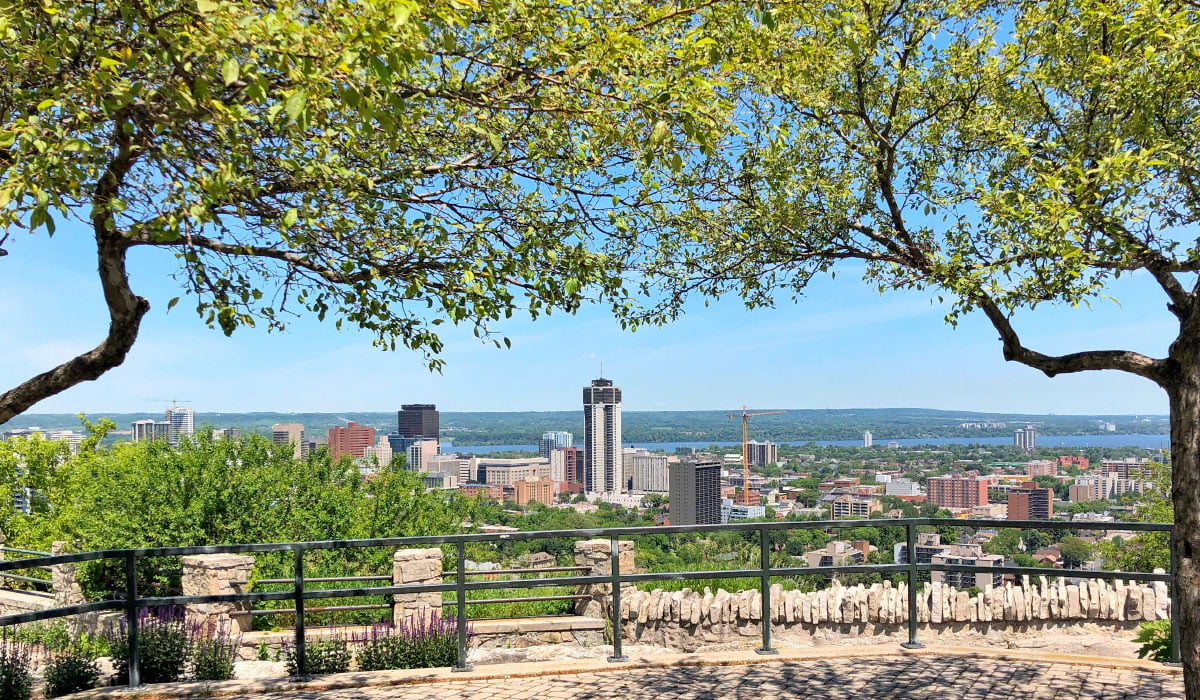
Hamilton is a city shaped as much by geography as by growth. Lake Ontario and Hamilton Harbour define one edge, while the Niagara Escarpment cuts through the city and creates the distinction residents know simply as the lower city and the Mountain.
Beyond those geographic landmarks, Hamilton is made up of communities that developed with their own identities. That variety is one of the most important things to understand about living in Hamilton. The city combines historic urban neighbourhoods, established suburban communities, newer development, waterfront and escarpment landscapes, major healthcare and education institutions and rural areas within one municipality.
For someone considering a move, Hamilton is better understood as a collection of places rather than a single housing market. Where you live strongly influences how you experience the city, how you get around and which amenities, natural areas and employment centres become part of everyday life.
Understanding Hamilton: The Lower City, Mountain & Escarpment
Few Canadian cities are divided by a natural feature as visibly as Hamilton. The Niagara Escarpment crosses the city from east to west. Neighbourhoods below it are generally referred to as the Lower City, while those above it form Hamilton Mountain. This distinction is more than geographic.
The Lower City
Hamilton’s lower city contains many of its oldest urban neighbourhoods, traditional commercial streets and major institutions. Downtown, Durand, Kirkendall, Westdale, Crown Point and other established areas each developed differently and contain their own combinations of housing, shops, restaurants, parks and community destinations. The lower city is also closely connected to Hamilton Harbour, McMaster University, major healthcare facilities and the city’s historic industrial areas. Housing frequently reflects the city’s age, with century homes, brick houses, smaller urban lots, apartments, condominiums, and redevelopment existing in close proximity.
Hamilton Mountain
Above the Escarpment, Hamilton Mountain developed largely through later stages of the city’s growth. Its neighbourhoods generally have a more suburban development pattern, with detached homes, townhomes, shopping areas, parks, schools and recreation distributed across a broad geographic area. The Lincoln M. Alexander Parkway is an important east-west transportation route across the Mountain, while several escarpment accesses connect it with the lower city.
Understanding this lower-city/Mountain relationship is one of the most useful starting points for anyone unfamiliar with Hamilton.
A City of Distinct Communities
Hamilton’s municipal boundaries extend well beyond the traditional urban city. Ancaster, Dundas, Stoney Creek, Waterdown and other communities retain recognizable identities of their own, even though they are part of Hamilton.
Dundas has a traditional downtown surrounded by established neighbourhoods and the Dundas Valley.
Ancaster combines a historic village, mature residential areas, newer suburban development and rural properties.
Stoney Creek stretches from Lake Ontario across the Niagara Escarpment, with established neighbourhoods, newer development and waterfront areas.
Waterdown has grown outward from an established village centre near the Escarpment and sits close to the Burlington boundary.
Environment & Outdoor Lifestyle
Hamilton’s industrial history is widely recognized, but the city’s natural geography is equally important to its identity.
Hamilton Harbour & Lake Ontario
Hamilton Harbour helped shape the city’s industrial and transportation history and remains a defining feature of the lower city. The waterfront has also become an important recreational space, with parks, trails, and public spaces connecting residents to the harbour and Lake Ontario.
Bayfront Park and Pier 4 Park are among the destinations that provide access to the waterfront, while the broader harbour area reflects both Hamilton’s industrial heritage and its continuing evolution.
The Niagara Escarpment
The Escarpment gives the city another defining landscape, creating a physical division between the lower city and Mountain while also supporting trails, conservation areas, waterfalls, and natural spaces across the municipality.
Hamilton is particularly known for the many waterfalls found along the Niagara Escarpment and its surrounding creeks. Well-known examples include Webster’s Falls and Tew Falls near Dundas, Tiffany Falls near Ancaster and Devil’s Punchbowl in Stoney Creek. Together with the Bruce Trail and surrounding conservation lands, these natural features make the Escarpment an unusually visible part of everyday life in Hamilton.
For residents, access to these areas isn’t limited to one part of the city. Escarpment trails, waterfalls and conservation lands extend through several Hamilton communities, providing opportunities for hiking and outdoor recreation without travelling far from urban neighbourhoods.
Dundas Valley & Conservation Lands
Toward the western side of Hamilton, the Dundas Valley adds forests, trails and conservation lands to the city’s landscape. Other natural areas extend through Ancaster, Stoney Creek, Waterdown and rural Hamilton, giving residents access to environments that can feel far removed from the city’s urban core. The relationship between urban neighbourhoods and natural geography is one of Hamilton’s most distinctive characteristics.
Exploring Hamilton’s Neighbourhoods
Hamilton’s neighbourhoods developed over different periods and around different industries, transportation routes and institutions. As a result, their character can change noticeably within relatively short distances.
Westdale – An established west end community with a recognizable commercial village and close relationship with McMaster University. Housing includes older detached homes and other residential options on mature streets. Its location provides access to the university, nearby healthcare facilities, trails and West Hamilton amenities.
Kirkendall & Durand – Established lower-city neighbourhoods close to downtown. Older homes, mature streets and access to restaurants, shops, parks and central-city amenities contribute to their character. For buyers interested in historic housing and a more urban setting, these areas provide a very different experience from Hamilton Mountain or newer suburban communities.
Crown Point & East Hamilton – Crown Point and surrounding neighbourhoods reflect another part of the city’s urban history. Ottawa Street provides a recognizable commercial destination, while surrounding residential streets contain older housing and established neighbourhoods. East Hamilton also provides convenient access toward the Red Hill Valley Parkway and Stoney Creek.
Hamilton Mountain – Includes communities developed over several decades, with housing ranging from established detached homes and bungalows to townhomes and newer residential developments. For buyers unfamiliar with Hamilton, individual Mountain neighbourhoods should ultimately be compared based on their location, housing era, transportation routes and surrounding amenities rather than being grouped simply because they sit above the Escarpment.
An experienced local REALTOR® can help you compare these neighbourhoods and determine the best one for your needs.
A Major Centre for Healthcare, Education & Employment
Hamilton’s identity extends well beyond its role as a residential community. Healthcare and education are particularly important to the city. Hamilton Health Sciences, St. Joseph’s Healthcare Hamilton and McMaster University contribute to major employment, research and education activity.
Manufacturing and skilled trades remain significant parts of the city’s economy, while logistics, construction, professional services, retail and other industries contribute to a more diverse employment base.
Hamilton’s location also places it within the broader western Greater Toronto and Hamilton Area economy, with connections toward Burlington, Oakville, Toronto, Brantford and Niagara. For someone considering a move, this matters because the city isn’t simply a community from which residents commute elsewhere. It is a major employment and institutional centre in its own right.
Culture, Food & Everyday Life in Hamilton
Hamilton’s community identity is strongly connected to its neighbourhoods and local commercial districts. Downtown, James Street North, Locke Street, Ottawa Street, and other areas offer restaurants, shops, arts, entertainment, and community destinations across the city.
The city’s arts and cultural scene has also become an important part of Hamilton’s contemporary identity, alongside longstanding institutions, sports, festivals and community events.
Everyday life varies considerably depending on location. Someone living in a lower-city neighbourhood may regularly walk to restaurants or local shops, while a Mountain resident may rely more heavily on neighbourhood commercial areas and driving. Residents of Dundas, Ancaster, Waterdown or Stoney Creek may orient much of their daily routine around those communities rather than downtown Hamilton.
Hamilton Real Estate: What Buyers and Sellers Should Understand
Hamilton’s real estate reflects everything that makes the city geographically and historically complex. A century home in the lower city, a bungalow on Hamilton Mountain, newer property in Binbrook, an executive home in Ancaster, and rural property in Flamborough are all part of the city’s real estate, but they should not be evaluated as though they belong to one uniform market.
Housing includes:
- Century and character homes
- Established detached houses and bungalows
- Townhomes and condos
- Newer suburban construction
- Executive and custom properties
- Waterfront homes
- Rural and country properties
Property age is particularly relevant in many established neighbourhoods. Buyers considering older homes may need to pay closer attention to renovations, building systems, maintenance and property conditions. Rural properties can also introduce different considerations, including wells, septic systems, property access and conservation restrictions. Waterfront or escarpment-adjacent properties may require additional property-specific due diligence.
For sellers, meaningful market comparisons should reflect the neighbourhood, housing era, property type, lot and condition rather than relying solely on a Hamilton-wide average.
For continuously updated information on housing activity and trends, explore our Hamilton Market Report. Buyers and sellers can also visit our Buyer’s Guide and Seller’s Guide for practical information about preparing for a move.
Getting Around Hamilton
For buyers, transportation should be evaluated at the neighbourhood or property level rather than at the city level. A resident of West Hamilton, Stoney Creek, Waterdown, and Hamilton Mountain can have very different routes to the same regional destination.
The QEW and Highway 403 provide major regional connections, while the Lincoln M. Alexander Parkway and Red Hill Valley Parkway form important routes within the city. Additionally, Hamilton Street Railway provides local transit, while GO Transit connects Hamilton with destinations across the Greater Toronto and Hamilton Area.
Why Do People Choose Hamilton?
Hamilton’s appeal comes largely from the amount of choice contained within one municipality. Someone can choose an older urban neighbourhood close to local restaurants and shops, an established suburban community on the Mountain, a historic community such as Dundas or Ancaster, newer development, waterfront surroundings or a rural property without leaving Hamilton.
The city also provides:
- Major healthcare and education institutions
- A significant local employment base
- Lake Ontario and Hamilton Harbour
- The Niagara Escarpment, waterfalls, trails and conservation areas
- Historic and established neighbourhoods
- Newer suburban communities
- Arts, culture, restaurants and local commercial districts
- Highway, local transit and GO Transit connections
- Access toward Burlington, Toronto, Niagara and Brantford
- A broad range of housing and community environments
Hamilton’s defining advantage isn’t one particular neighbourhood or property type. It is the ability to choose among very different ways of living within the same city.
People Moving to Hamilton Often Ask:
What is the difference between the lower city and Hamilton Mountain?
The Niagara Escarpment physically divides much of urban Hamilton. Areas below it are generally referred to as the lower city, while neighbourhoods above it make up Hamilton Mountain. The two areas developed differently and can vary in housing age, streetscape, transportation and access to amenities.
Is Ancaster part of Hamilton?
Yes. Ancaster is part of the City of Hamilton, as are communities including Dundas, Stoney Creek and Waterdown. These communities retain distinct local identities while sharing municipal services with the broader city.
Does Hamilton have GO Transit?
Yes. Hamilton has GO Transit connections to other parts of the Greater Toronto and Hamilton Area. The usefulness of individual stations and services depends on where someone lives and where they travel, so transportation should be considered as part of neighbourhood selection.
What types of homes can you find in Hamilton?
Hamilton real estate includes century homes, established detached houses and bungalows, townhomes, condominiums, newer suburban construction, executive homes, waterfront properties and rural real estate. Availability and housing characteristics vary significantly by community and neighbourhood.
What should someone new to Hamilton understand before choosing a neighbourhood?
Start with geography. Decide whether the lower city, Hamilton Mountain or one of Hamilton’s distinct communities better fits your daily routine. From there, compare commute, housing age, walkability, access to parks and trails, schools, amenities and the type of neighbourhood environment you prefer.
Nearby Communities Buyers Also Explore
Hamilton’s size means some of the most relevant comparisons are actually communities within Hamilton itself. Our dedicated guides to Ancaster, Stoney Creek and Waterdown provide deeper information for buyers considering those areas.
Outside Hamilton, Burlington is one of the most common comparisons. Immediately east of the city, Burlington provides Lake Ontario access, three GO stations, established neighbourhoods and connections toward the GTA. Oakville may also enter the search for buyers travelling farther east, particularly those comparing Lake Ontario communities and GO Transit access. To the west, Brantford provides another option along Highway 403 and may be relevant for buyers whose work or family connections extend in that direction.
The right comparison depends on whether the move is being driven primarily by commute, housing, community setting, proximity to family or access to particular amenities.
Your Hamilton Real Estate Experts
Understanding Hamilton real estate starts with understanding Hamilton itself. The lower city and Mountain, Niagara Escarpment, harbour, historic neighbourhoods and distinct communities create meaningful differences that aren’t always apparent from a listing or map.
For buyers, local guidance can help narrow a large search area into the parts of the city that genuinely fit. Once the location is right, individual properties can be evaluated within the context of their neighbourhood, housing era and surrounding amenities.
For sellers, that same context helps identify meaningful competing properties and understand which features of the home and location are most relevant to prospective buyers.
Our Royal LePage® Burloak REALTORS® can help buyers and sellers navigate Hamilton at both the city and neighbourhood level.
Explore Hamilton homes for sale, our Hamilton Market Report, or Contact Our Team to connect with a local real estate professional.
Explore the Hamilton Real Estate Market
At Royal LePage® Burloak our market-leading team of real estate professionals are dedicated to serving your real estate needs. To help you find that perfect home or condo in Hamilton, contact us today and we will put you in-touch with one of our experience REALTORS®.