
Quick Read Summary
Mississauga, Ontario is a large, diverse GTA city made up of distinct communities, waterfront areas, established neighbourhoods, employment districts, and a growing urban core. Port Credit and Clarkson connect residents to Lake Ontario, Streetsville offers a traditional village environment along the Credit River, and City Centre provides high-rise condominium living close to major shopping, civic, and entertainment amenities. Housing ranges from established detached homes and townhomes to condominiums, infill and newer development. For buyers, choosing where to live in Mississauga often starts with location: commute, GO Transit, highway access, employment, waterfront proximity and the type of community environment you prefer can significantly narrow the search.
Key Takeaways
- Mississauga is made up of distinct communities rather than being centred around one traditional downtown.
- Housing includes established detached homes, townhomes, condominiums, infill and redevelopment across communities developed during different periods.
- GO Transit, MiWay, major highways and proximity to Toronto Pearson International Airport make transportation an important consideration when choosing a neighbourhood.
- Buyers should compare Mississauga at the community and neighbourhood level because housing, transportation, amenities and everyday lifestyle vary significantly across the city.
Mississauga is one of the largest cities in the Greater Toronto Area, but it does not function like a city built outward from one traditional downtown. Instead, modern Mississauga grew from a collection of established communities and former villages, including Port Credit, Streetsville and Clarkson, alongside later suburban development and the emergence of City Centre. These different origins are still visible today.
Along Lake Ontario, communities such as Port Credit and Clarkson have longstanding local identities and connections to the waterfront. Streetsville retains a recognizable village centre along the Credit River. City Centre provides a much more urban environment of high-rise condominiums, offices, shopping and civic amenities. Between them are extensive residential neighbourhoods, employment districts, parks and commercial areas developed over many decades.
Mississauga is also closely connected to the wider region. Toronto Pearson International Airport, major highways, GO Transit, MiWay and proximity to Toronto have made transportation and employment central to the city’s development.
For someone considering a move, the first question is often not simply which Mississauga neighbourhood has the housing you prefer. It is which part of this large, varied city best fits how you expect to live, work, and travel.
Understanding Mississauga: One City Built from Many Communities
Understanding Mississauga begins with understanding that its communities did not all develop at the same time or in the same way. Port Credit grew around Lake Ontario and the Credit River. Streetsville developed as an inland village. Clarkson has its own long-established history in southwest Mississauga. Cooksville became another important local centre.
Later residential growth connected these and other communities through suburban neighbourhoods, major roads, shopping areas and employment districts. The City Centre eventually emerged as Mississauga’s modern civic and commercial centre, creating an urban focal point that looks very different from the older communities around it.
This history helps explain why Mississauga can feel less like one continuous city and more like a collection of places connected by major transportation corridors. For residents, that’s not merely an interesting historical detail, it influences where people shop, commute, spend time outdoors, access transit and build their daily routines.
Exploring Mississauga’s Neighbourhoods
Port Credit – One of Mississauga’s most recognizable communities. Located where the Credit River meets Lake Ontario, it combines a traditional commercial district with waterfront parks, restaurants, local businesses, residential streets and GO Transit. Housing includes detached homes, townhomes and condominiums, with established properties existing alongside newer development.
Streetsville – Its traditional main street, established residential areas and location along the Credit River create a smaller-community environment within the larger city. Restaurants, shops and local businesses contribute to a recognizable village centre, while Streetsville GO provides an important regional transportation connection.
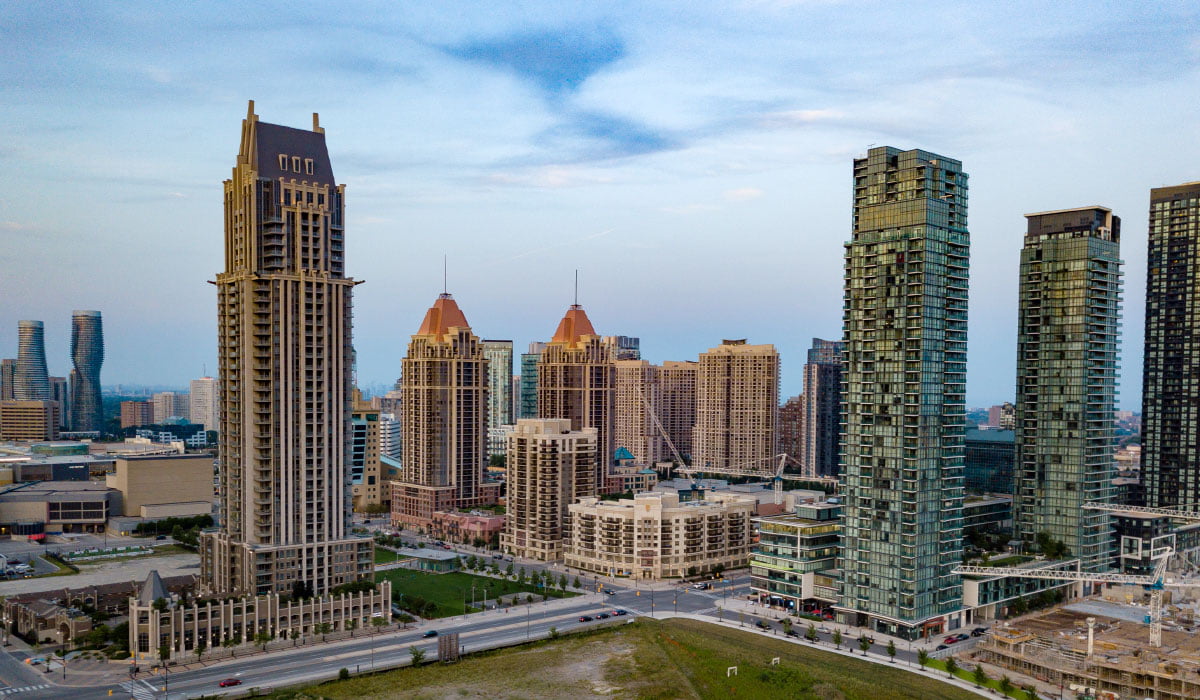
City Centre – High-rise condominiums, office buildings, civic facilities, shopping and entertainment are concentrated around the city’s central area. Square One is a major regional destination, while the surrounding district provides one of Mississauga’s most urban residential environments. For buyers, City Centre is less about traditional neighbourhood streets and more about condominium living, access to amenities and connectivity within the city and broader region.
Lorne Park & Mineola – Established south Mississauga communities characterized largely by detached housing, mature streets and proximity to Lake Ontario and Port Credit. Individual properties can differ considerably in age, lot characteristics and redevelopment, making the immediate street and property particularly important when comparing homes.
Clarkson – Combines established residential neighbourhoods with access to Lake Ontario, parks, local services and Clarkson GO Station. Its location in southwest Mississauga also places it close to the Oakville boundary, making it particularly relevant for residents whose daily travel extends west.
Erin Mills & Central Erin Mills – Represents a major stage in Mississauga’s planned suburban development. Residential neighbourhoods, schools, parks, shopping and other amenities were developed across a large area, creating a community environment distinct from the city’s older villages and waterfront areas.
Meadowvale – Established planned community in northwest Mississauga. Its location provides access to major employment areas, highways, parks and GO Transit, giving it a different relationship with the city than communities along Lake Ontario.
Cooksville & Applewood – Cooksville is one of Mississauga’s older centres and sits centrally within the city, while Applewood offers established residential neighbourhoods farther east toward the Toronto boundary. Both demonstrate that Mississauga’s older community history extends beyond Port Credit and Streetsville.
Environment & Outdoor Lifestyle
Despite its large urban footprint, Mississauga is shaped by several significant natural features.
Lake Ontario
Lake Ontario forms the city’s southern boundary and is central to communities such as Port Credit and Clarkson. Waterfront parks, trails and public spaces provide access to the shoreline, while residential areas near the lake offer a different environment from Mississauga’s inland neighbourhoods.
The Credit River
The Credit River travels through Mississauga from north to south and provides another important natural corridor. It passes through and near several established communities, including Streetsville and Erindale, connecting parks, trails and natural areas through the city. For residents, the river and surrounding green spaces provide a contrast to Mississauga’s highways, employment districts and major commercial areas.
Parks & Trails
Neighbourhood parks, recreation facilities and trail systems are distributed throughout Mississauga, while waterfront and river corridors provide larger natural destinations.
As a result, outdoor access depends significantly on location. Living near Lake Ontario, the Credit River or one of Mississauga’s larger park systems can create a very different everyday environment from living closer to City Centre or a major employment corridor.
Economy & Employment
Mississauga’s relationship with Toronto sometimes leads people to think of it primarily as a commuter community. That assumption understates its role within the regional economy. The city has major employment districts that support industries such as professional services, logistics, manufacturing, technology, life sciences, retail, and other sectors. Toronto Pearson International Airport is particularly important. Located in northeast Mississauga, Pearson has helped shape surrounding transportation, logistics, hospitality and employment activity and connects the city directly to national and international travel.
Getting Around Mississauga
Transportation strongly influences daily life in Mississauga because of the city’s size and decentralized layout.
GO Transit provides regional connections from several parts of the city, including stations serving communities such as Port Credit, Clarkson, Streetsville and Meadowvale. MiWay provides local bus service throughout Mississauga and connections to surrounding transit systems.
Major highways include the QEW, Highway 403, Highway 401, and Highway 407, providing access to Toronto, Oakville, Burlington, and other parts of the GTA.
Living in Mississauga
What is everyday life like in Mississauga?
Since Mississauga has multiple centres, everyday life is distributed throughout the city. City Centre has major shopping, civic, and entertainment destinations, while Port Credit and Streetsville offer more traditional main-street environments. Neighbourhood shopping areas and commercial corridors serve communities throughout Mississauga, meaning residents don’t necessarily travel to City Centre for everyday needs.
This decentralized structure is one of Mississauga’s defining characteristics. Residents can live within the same city while having very different relationships with its waterfront, village centres, employment districts and urban core.
Mississauga Real Estate: What Buyers and Sellers Should Understand
Mississauga’s housing developed alongside the city’s transformation from separate communities into a major urban centre. For buyers, the city’s scale makes it especially important to set location priorities when searching Mississauga real estate before focusing on individual listings. Established homes can be found throughout south and central Mississauga, while planned suburban communities introduced housing across areas such as Erin Mills and Meadowvale. Townhomes provide another major segment of the housing stock, and condos are particularly prominent around City Centre and increasingly in other areas.
Older communities such as Port Credit, Mineola, Lorne Park, and Streetsville also include renovation, infill, and redevelopment alongside established housing. A Port Credit condominium, Lorne Park detached home, Streetsville property, Erin Mills townhouse and City Centre high-rise unit may all be in Mississauga, but they represent very different versions of living in the city.
For sellers, neighbourhood, property type, access to transportation and the immediate competitive market can matter more than a broad Mississauga-wide comparison.
Why Do People Choose Mississauga?
Mississauga’s size creates a level of choice that smaller communities cannot easily replicate. Residents can choose between waterfront communities, established residential neighbourhoods, traditional village centres, planned suburban areas and high-rise urban living while remaining within the same city. Mississauga also provides:
- Lake Ontario waterfront communities and parks
- The Credit River and extensive green spaces
- Port Credit and Streetsville’s established local centres
- A major urban core around City Centre
- Significant employment within the city itself
- Toronto Pearson International Airport
- Multiple GO Transit connections
- Major highway access throughout the GTA
- Detached homes, townhomes and condos
- Waterfront properties
- Proximity to Toronto, Oakville and other GTA communities
The challenge for buyers looking for homes for sale in Mississauga isn’t finding variety. It is deciding which part of a very large city best matches how they intend to live.
People Moving to Mississauga Often Ask:
Is Mississauga only a commuter city?
No. While many residents travel to Toronto and other GTA communities for work, Mississauga is also a major employment centre with significant business, industrial, logistics, retail and professional activity.
Does Mississauga have waterfront communities?
Yes. Mississauga extends along Lake Ontario, with Port Credit and Clarkson among the best-known waterfront communities. Parks, trails and residential areas provide access to the lake in several parts of south Mississauga.
What is the difference between Port Credit and City Centre?
Port Credit is an established lakeside community with a traditional commercial district, waterfront setting and GO station. City Centre is Mississauga’s modern urban core, characterized by high-rise condominiums, offices, major shopping and civic amenities. They provide two distinctly different ways to live in Mississauga.
Is Mississauga convenient for commuting?
Mississauga has multiple GO Transit connections, MiWay transit, access to major highways and proximity to Pearson Airport. However, because the city is geographically large, commuting convenience depends heavily on the specific neighbourhood and destination.
How should buyers choose where to live in Mississauga?
Start with the places you expect to travel most often—work, school, GO Transit, highways, family or other regular destinations. Then consider whether you prefer a waterfront community, established neighbourhood, village environment, suburban area or more urban setting. This can narrow a very large search area considerably.
Nearby Communities to Explore
Mississauga’s position immediately west of Toronto and east of Halton Region gives buyers several relevant comparisons.
Oakville provides an established Lake Ontario community with historic waterfront centres, mature neighbourhoods and newer growth farther north.
Burlington offers another Lake Ontario setting farther west, with a traditional downtown waterfront, established neighbourhoods, three GO stations and access to the Niagara Escarpment.
Buyers may also compare Mississauga directly with Toronto, particularly when employment, transit, or proximity to the city drives the move.
The most useful comparison depends on whether the priority is regional transportation, housing, community scale, waterfront access, employment or proximity to family and everyday destinations.
Your Mississauga Real Estate Experts
Mississauga’s size is one of its greatest advantages, but it can also make a home search difficult to navigate. Port Credit, Streetsville, City Centre, Clarkson, Erin Mills, Meadowvale and other communities provide very different environments within the same city. Understanding those differences can help buyers avoid searching too broadly and concentrate on locations that genuinely fit their daily routine.
For sellers, this same local context matters when determining which properties provide meaningful competition and which home and location features matter most to prospective buyers.
Our Royal LePage® Burloak REALTORS® can help buyers and sellers navigate Mississauga based on the specific community, property and priorities involved.
Explore Mississauga homes for sale, Mississauga condos, our Buyer’s Guide, or Contact Our Team to connect with a local real estate professional.
Explore the Mississauga Real Estate Market
At Royal LePage® Burloak our market-leading team of real estate professionals are dedicated to serving your real estate needs. To help you find that perfect home or condo in Mississauga, contact us today and we will put you in-touch with one of our experience REALTORS®.